
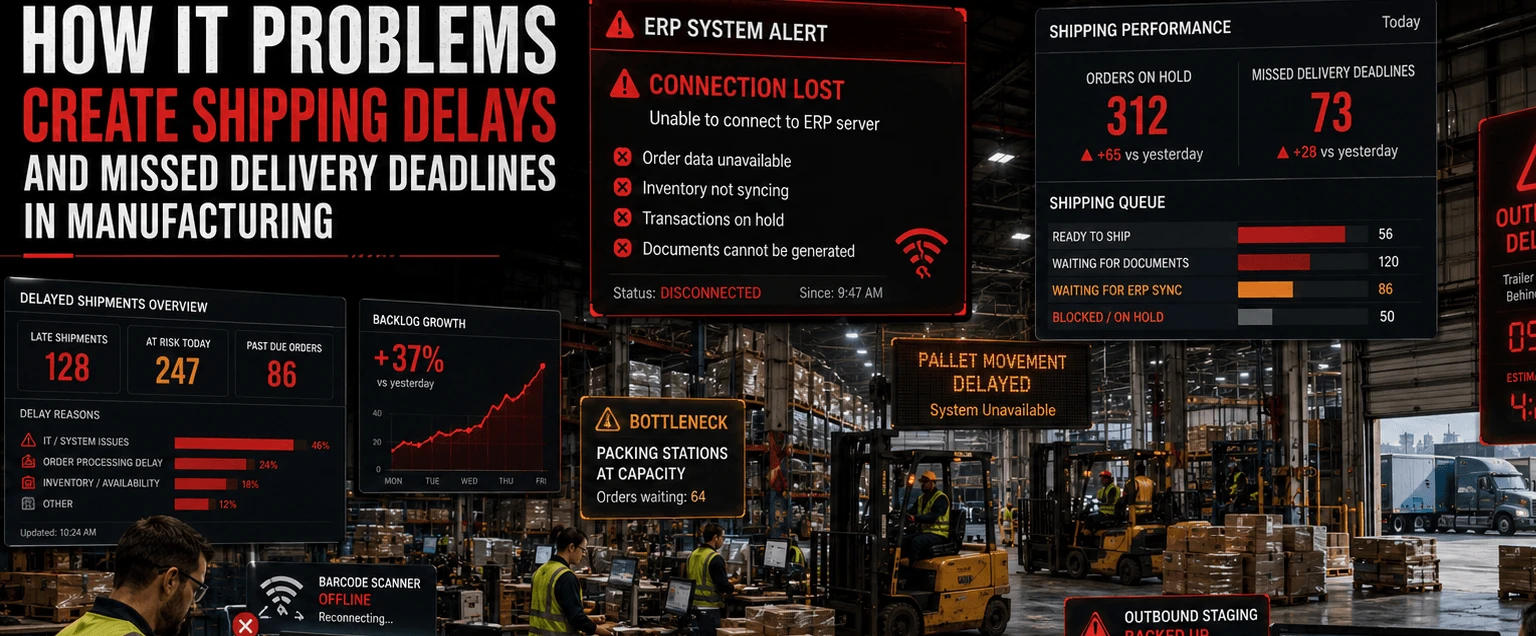
Many manufacturers assume shipping delays are caused primarily by labor shortages, logistics bottlenecks, or supply chain disruptions. In reality, hidden IT and infrastructure problems are often a major operational factor behind delayed shipments, inventory inaccuracies, warehouse slowdowns, and missed delivery commitments. For manufacturers with 20–100 employees, even short disruptions affecting ERP systems, warehouse connectivity, barcode scanning, or production scheduling can create cascading fulfillment problems lasting hours or even days.
In manufacturing environments where delivery timelines directly affect customer relationships and revenue, operational continuity depends heavily on stable technology systems. Network outages, ERP instability, aging infrastructure, ransomware incidents, and disconnected operational systems increasingly create hidden shipping and fulfillment risks many manufacturers don’t recognize until deliveries are already delayed.
The 5 Most Common IT Problems That Disrupt Manufacturing Shipping Operations
Shipping disruptions rarely begin at the loading dock. Most operational delays originate from technology dependencies failing earlier in the manufacturing workflow.
1.ERP and Inventory Synchronization Failures
Manufacturing shipping operations rely heavily on ERP systems for:
- inventory availability
- shipment coordination
- order processing
- warehouse synchronization
- production status updates
When ERP connectivity becomes unstable:
- inventory data may become inaccurate
- warehouse teams lose shipment visibility
- order fulfillment slows down
- production schedules disconnect from shipping operations
Many missed delivery deadlines begin with ERP synchronization issues—not transportation failures.
2.Warehouse Wi-Fi and Barcode Scanning Instability
Many warehouse operations depend on:
- wireless barcode scanners
- mobile inventory systems
- shipping tablets
- cloud-connected logistics platforms
Aging wireless infrastructure can create:
- delayed barcode processing
- disconnected scanners
- shipment tracking failures
- manual inventory workarounds
This is especially disruptive during:
- peak production periods
- outbound shipping deadlines
- multi-shift warehouse operations
Small Wi-Fi interruptions can create significant fulfillment slowdowns across warehouse environments.
3.Production Scheduling and Shipping Become Disconnected
Manufacturing shipping depends heavily on coordination between:
- production teams
- warehouse operations
- inventory management
- logistics scheduling
When production systems and shipping systems lose synchronization:
- finished goods may not appear available
- shipping schedules become inaccurate
- warehouse planning slows
- customer communication suffers
IT instability often creates operational blind spots between production and fulfillment teams.
4.Aging Infrastructure Creates Operational Bottlenecks
Manufacturers operating:
- aging switches
- unsupported firewalls
- unstable servers
- outdated ERP environments
may experience:
- intermittent connectivity
- delayed system response times
- unstable warehouse communication
- shipping coordination interruptions
These issues often appear “minor” until operational pressure increases during:
- production surges
- seasonal demand
- customer deadlines
Aging infrastructure frequently creates hidden operational inefficiencies before major outages occur.
5.Ransomware and Cybersecurity Incidents Halt Fulfillment Operations
Ransomware attacks increasingly affect:
- ERP systems
- warehouse coordination
- shipping platforms
- inventory databases
- barcode systems
Operational consequences may include:
- delayed outbound shipments
- lost inventory visibility
- manual fulfillment workarounds
- halted production scheduling
Many manufacturers underestimate how quickly cybersecurity incidents disrupt fulfillment operations.
What Happens Operationally When Shipping Systems Are Disrupted?
Shipping disruptions rarely affect only logistics teams. In manufacturing environments, fulfillment interruptions quickly spread operationally across the business.
Operational Consequences
Delayed Customer Shipments
Manufacturers may miss:
- retailer deadlines
- distributor commitments
- production-linked delivery windows
- customer SLA expectations
Inventory Inaccuracies
Disconnected systems often create:
- duplicate inventory entries
- shipment tracking errors
- warehouse confusion
- material availability issues
Increased Labor Costs
Employees may:
- manually reprocess orders
- re-enter shipment data
- work overtime
- troubleshoot operational delays
Customer Satisfaction and Revenue Impact
Shipping problems can lead to:
- lost customer trust
- contract penalties
- expedited shipping expenses
- reduced operational confidence
Operational disruptions often continue long after systems technically recover.
Why Manufacturers Are Especially Vulnerable to Shipping Disruptions?
Manufacturing shipping operations depend heavily on continuous coordination between operational systems.
Key Manufacturing Vulnerabilities
Production and Shipping Are Highly Interconnected
Manufacturers rely on:
- ERP coordination
- inventory visibility
- warehouse synchronization
- real-time production updates
Operational Timing Matters
Shipping disruptions often create:
- production backlogs
- warehouse congestion
- overtime recovery
- customer communication issues
Many Systems Depend on Stable Connectivity
Fulfillment operations increasingly rely on:
- wireless infrastructure
- cloud platforms
- connected scanners
- integrated warehouse systems
Limited Operational Visibility
Manufacturers with aging infrastructure often lack:
- proactive monitoring
- operational alerting
- infrastructure redundancy
- visibility into fulfillment bottlenecks
Small infrastructure issues can quickly escalate into customer-facing operational problems.
The Real Cost of Shipping Delays Caused by IT Problems (Illustrative Examples)
Beverage Manufacturer
A warehouse Wi-Fi outage disrupted barcode scanners and shipment coordination during peak outbound operations.
Operational impact:
- delayed order processing
- manual inventory tracking
- shipment backlogs
- overtime warehouse labor
Root cause:
- aging wireless infrastructure
- lack of proactive monitoring
Furniture Manufacturer
An ERP synchronization issue disconnected production scheduling from warehouse fulfillment systems.
Operational impact:
- delayed shipment preparation
- inaccurate inventory visibility
- customer delivery delays
- manual production coordination
Estimated impact:
- missed retailer delivery commitments
- increased labor recovery costs
Plastics Manufacturer
A ransomware incident disrupted shipping coordination and inventory systems.
Operational impact:
- halted outbound logistics
- disconnected warehouse workflows
- delayed customer shipments
- manual operational workarounds
Many manufacturers discover operational shipping dependencies only after disruption occurs.
How Manufacturers Reduce Shipping Delays Caused by IT Problems?
Manufacturers that improve shipping reliability typically strengthen operational continuity across production, warehousing, and infrastructure systems.
The 5-Layer Manufacturing Fulfillment Continuity Framework
1.Improve ERP and Inventory Stability
Manufacturers should regularly evaluate:
- ERP performance
- inventory synchronization
- warehouse integrations
- production visibility systems
2.Modernize Warehouse Connectivity
Warehouse operations should support:
- reliable Wi-Fi coverage
- stable barcode systems
- mobile device performance
- redundancy planning
Stable warehouse infrastructure directly improves fulfillment reliability.
3.Segment and Protect Operational Systems
Manufacturers should separate:
- production environments
- warehouse systems
- guest networks
- backup infrastructure
This improves:
- operational resilience
- ransomware containment
- recovery speed
4.Implement Continuous Monitoring
Proactive monitoring helps identify:
- connectivity instability
- bandwidth bottlenecks
- ERP slowdowns
- infrastructure degradation
before operational disruption escalates.
5.Build Operational Recovery Procedures
Manufacturers should document:
- shipping continuity procedures
- warehouse recovery workflows
- ERP recovery priorities
- operational escalation plans
Shipping continuity depends heavily on operational preparedness.
Warning Signs Manufacturers Should Not Ignore
Manufacturers should investigate:
- Intermittent warehouse Wi-Fi issues
- Delayed barcode scanner response
- Inventory synchronization problems
- Slow ERP performance during shipping operations
- Recurring shipping software disconnections
- Warehouse connectivity complaints
- Manual shipment workarounds increasing
- Delayed order processing visibility
Many shipping disruptions begin with small operational warning signs manufacturers overlook.
Illustrative Scenario: IT Instability Creates Shipping Delays
A 60-employee beverage manufacturer in Los Angeles experienced recurring shipping delays during peak production weeks.
Initially, the problems appeared operational:
- delayed outbound shipments
- warehouse coordination bottlenecks
- inconsistent inventory visibility
However, the root causes were technology-related:
- unstable warehouse Wi-Fi
- aging switches
- ERP synchronization latency
- limited infrastructure monitoring
Operational consequences included:
- overtime warehouse labor
- delayed customer shipments
- manual fulfillment coordination
- increased operational frustration
After implementing:
- warehouse wireless modernization
- proactive infrastructure monitoring
- ERP optimization
- segmented operational networks
- operational continuity planning
the manufacturer significantly improved fulfillment reliability and reduced shipping delays.
Why Work With an IT Provider That Understands Manufacturing Fulfillment Operations?
Manufacturers should work with IT providers that understand:
- ERP operational dependencies
- warehouse infrastructure requirements
- shipping continuity risks
- operational visibility systems
- ransomware exposure in fulfillment environments
- manufacturing uptime requirements
Fulfillment reliability now depends heavily on operational technology stability—not just logistics coordination.
Trust Signals
Fothion supports manufacturing companies that require:
- stable operational infrastructure
- proactive monitoring and maintenance
- ERP and warehouse continuity planning
- cybersecurity-first operational environments
- manufacturing-focused IT strategy
- operational uptime improvements
With over 20 years of experience (since 2001), Fothion helps manufacturers reduce operational disruption, improve fulfillment reliability, and strengthen production continuity.
Get a Manufacturing Fulfillment Continuity Assessment (30 Minutes)
If you’re unsure whether hidden IT problems may be affecting shipping performance or operational reliability, the fastest next step is identifying your biggest fulfillment-related technology risks.
Book a 30-minute call with Fothion and we’ll:
- review operational bottlenecks affecting fulfillment
- assess ERP and warehouse system stability
- identify infrastructure vulnerabilities
- evaluate operational continuity exposure
- outline practical ways to reduce shipping disruption
Book here: https://fothion.com/schedule-a-phone-call/
FAQs (with answers):
1.How do IT problems cause manufacturing shipping delays?
IT problems can disrupt ERP systems, warehouse connectivity, inventory synchronization, barcode scanning, and shipping coordination, leading to delayed fulfillment operations.
2.What systems are most critical for manufacturing shipping operations?
ERP systems, warehouse Wi-Fi, barcode scanners, inventory platforms, shipping software, and production scheduling systems are all operationally critical.
3.Can ransomware affect shipping operations?
Yes. Ransomware can disrupt ERP systems, inventory databases, warehouse coordination, shipping software, and operational visibility across fulfillment environments.
4.Why are warehouse Wi-Fi systems important in manufacturing?
Warehouse Wi-Fi supports barcode scanners, mobile inventory systems, shipment coordination, and operational synchronization across fulfillment workflows.
5.How can manufacturers reduce shipping disruptions caused by IT problems?
Manufacturers can improve operational continuity through proactive monitoring, infrastructure modernization, ERP optimization, warehouse connectivity improvements, and disaster recovery planning.
6.Why do small network issues become larger fulfillment problems?
Small connectivity disruptions can interrupt inventory visibility, order processing, warehouse coordination, and shipping workflows, causing cascading operational delays.