
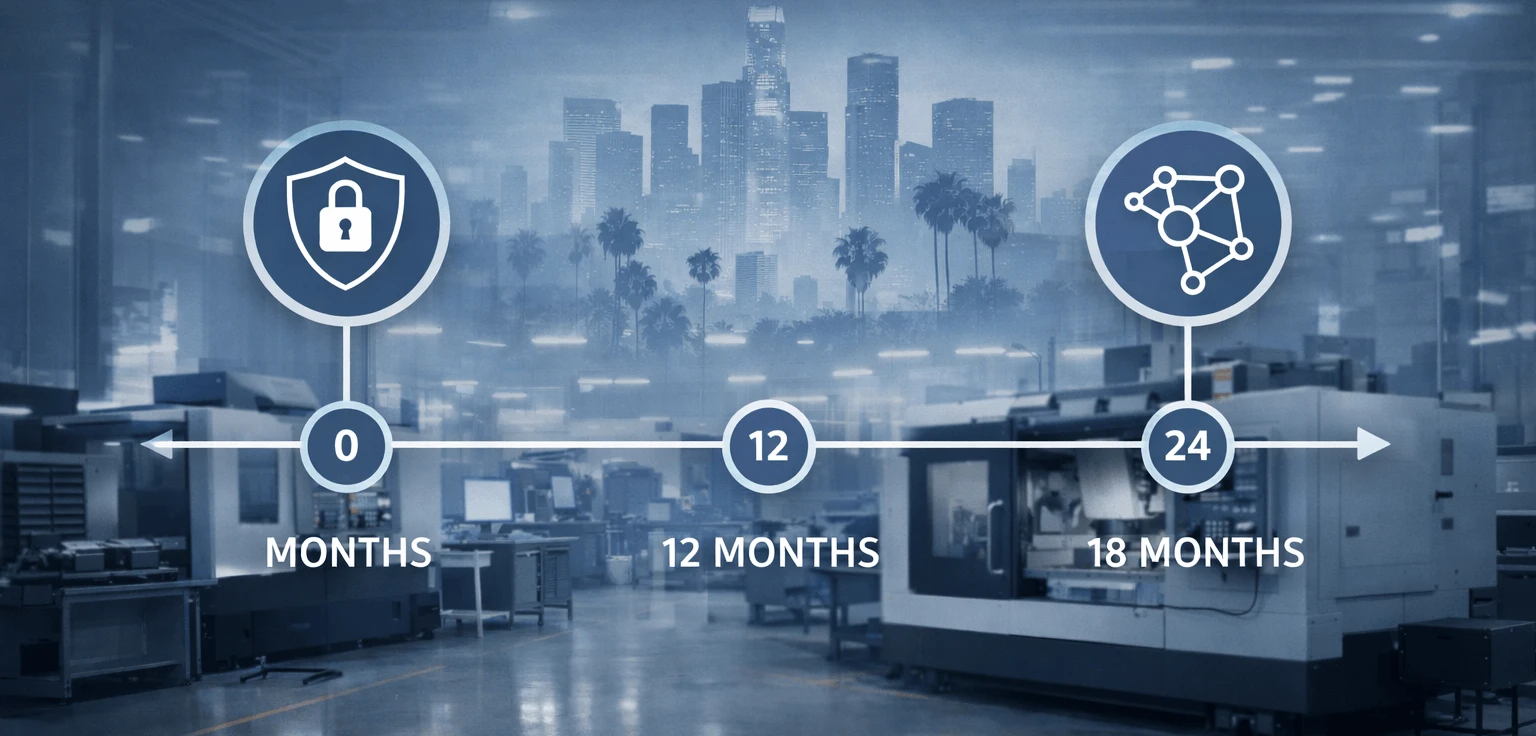
Most manufacturing companies with 20–100 employees benefit from a structured 12–24 month IT roadmap. Without a roadmap, organizations often overspend on reactive IT fixes and experience multiple unexpected system failures each year. A formal roadmap aligns cybersecurity improvements, infrastructure upgrades, ERP stability, and budgeting into a strategic technology plan that reduces operational risk and improves long-term decision making.
What an IT Roadmap Actually Is
An IT roadmap is a strategic planning document that outlines technology improvements over a defined timeline.
A proper roadmap typically includes:
- infrastructure upgrades
- cybersecurity improvements
- backup and disaster recovery planning
- compliance preparation
- budgeting forecasts
The goal is to prioritize the most important technology investments first.
The 5 Components of a Manufacturing IT Roadmap
- Risk Assessment and Security Review
The roadmap begins with identifying hidden risks such as:
-
- untested backups
- outdated servers
- ransomware vulnerabilities
- weak access controls
Addressing these risks reduces operational exposure.
- Infrastructure Stabilization Plan
Manufacturing infrastructure often includes:
-
- ERP servers
- network storage systems
- production-floor networking
The roadmap prioritizes upgrades that prevent downtime.
- Compliance and Insurance Alignment
Cyber insurance providers now expect organizations to implement:
-
- multi-factor authentication
- endpoint security monitoring
- documented recovery procedures
Planning these improvements in advance prevents last-minute compliance issues.
- Operational Resilience Planning
Manufacturers must define acceptable downtime levels.
This planning includes:
-
- recovery time objectives
- disaster recovery testing
- redundant systems for critical operations
Clear planning improves response during incidents.
- Budget Forecasting and Investment Planning
Instead of unpredictable emergency spending, a roadmap provides a predictable budget.
Companies can plan technology investments over 12–24 months, spreading costs while improving reliability.
What Happens If You Don’t Have an IT Roadmap
Organizations without a roadmap often experience:
- emergency server failures
- unexpected cybersecurity gaps
- unplanned capital expenses
- downtime during production periods
For example, a machine shop generating $6,000 per hour in revenue could lose $72,000 from a 12-hour ERP outage.
Strategic planning helps avoid these disruptions.
Illustrative Scenario: Building a 12-Month Roadmap After Surprise Outages
A 55-employee apparel manufacturer in Los Angeles had aging servers and unpredictable IT costs. They were stuck in “break/fix mode,” with no clear plan for upgrades, security, or recovery readiness.
After a structured program:
- A risk-first assessment identified the top 5 downtime and security exposures
- A 12-month phased roadmap was created (stabilize → secure → modernize)
- Server and network refresh priorities were sequenced around production schedules
- Backup testing cadence and quarterly executive reviews were established
Result: fewer emergencies, clearer budgeting, and a predictable plan leadership could follow.
Trust Signals
Manufacturing companies benefit from IT advisors who understand:
- ERP infrastructure
- production-floor networking
- cybersecurity risk management
- long-term technology planning
Strategic IT planning transforms technology from reactive support into a business growth tool.
Kickstart a 12–24 Month IT Roadmap for Your Plant
A roadmap turns IT from reactive support into a planned, risk-first strategy so upgrades happen on your schedule, not during an outage.
Book a 30-minute call with Fothion today and we’ll:
- rank your top 5 risks by downtime and ransomware impact
- sketch a phased 12-month plan (stabilize → secure → modernize)
- map budget ranges so leadership can plan without surprise capital shocks
Book here: https://fothion.com/schedule-a-phone-call/