
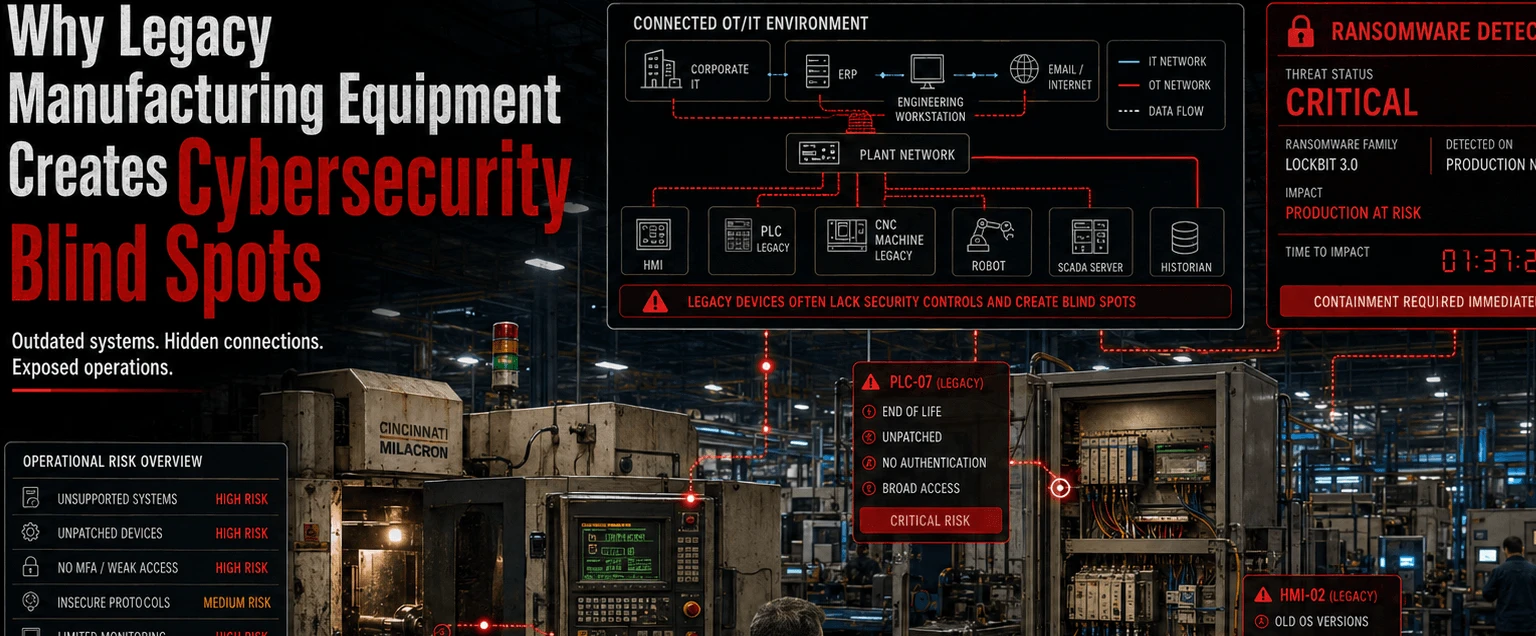
Many manufacturers continue operating legacy production equipment that was never designed for today’s cybersecurity threats. While these systems may still support daily operations, older CNC machines, PLCs, SCADA systems, industrial controllers, and production workstations often create hidden cybersecurity blind spots that expose manufacturers to ransomware, operational downtime, compliance issues, and production disruption.
For manufacturers with 20–100 employees, one compromised legacy device can allow attackers to move across production networks, disrupt ERP systems, access operational data, and halt manufacturing operations for hours or even days. The challenge is that many legacy systems cannot support modern security protections, making operational resilience increasingly difficult without the right network architecture, monitoring, and segmentation strategies.
The 5 Biggest Cybersecurity Risks Created by Legacy Manufacturing Equipment
Legacy manufacturing systems often remain operationally critical while simultaneously creating major cybersecurity exposure.
1.Unsupported Operating Systems Create Security Vulnerabilities
Many manufacturing environments still operate:
- Windows 7 or older systems
- unsupported embedded operating systems
- outdated HMIs
- aging engineering workstations
- obsolete industrial PCs
These systems frequently:
- no longer receive security updates
- contain known vulnerabilities
- cannot support modern endpoint protection
- remain exposed to ransomware attacks
Unsupported systems are among the most commonly exploited entry points in manufacturing environments.
2.Legacy Equipment Was Never Designed for Modern Cybersecurity
Many older production systems were designed primarily for:
- operational reliability
- machine communication
- isolated production environments
and not internet-connected manufacturing operations.
As manufacturers modernize operations, these systems increasingly connect to:
- ERP platforms
- warehouse systems
- remote vendor access
- cloud applications
- operational dashboards
Legacy equipment often becomes exposed without the security architecture needed to protect it.
3.Flat Networks Allow Threats to Spread Across Production Environments
Many manufacturers continue operating production equipment within flat networks where:
- office systems
- engineering workstations
- production systems
- warehouse devices
- backup environments
all communicate freely.
This creates major ransomware and operational risk because attackers may:
- move laterally across systems
- access production environments
- encrypt shared operational files
- disrupt manufacturing continuity
One compromised workstation can affect multiple operational systems quickly.
4.Vendor Remote Access Creates Hidden Entry Points
Legacy manufacturing equipment often requires:
- remote vendor maintenance
- external engineering access
- legacy VPN connectivity
- unmanaged remote software
Many manufacturers lack visibility into:
- who has access
- how systems are connected
- whether MFA exists
- how vendor credentials are secured
Third-party access remains one of the most overlooked manufacturing cybersecurity risks.
5.Legacy Systems Often Lack Monitoring and Visibility
Manufacturers frequently monitor:
- office computers
- email systems
- cloud applications
but lack visibility into:
- industrial controllers
- production workstations
- engineering systems
- machine communications
- OT network activity
This creates blind spots where:
- ransomware may spread undetected
- unusual behavior remains invisible
- operational compromise develops quietly
Many manufacturers only discover OT-related cybersecurity issues after production disruption begins.
Why Legacy Manufacturing Equipment Creates Operational Risk?
Cybersecurity issues affecting legacy equipment often become operational continuity problems very quickly.
Operational Consequences
Production Downtime
Compromised production systems may cause:
- halted production lines
- disconnected scheduling systems
- machine communication failures
- operational slowdowns
Engineering and Production File Loss
Manufacturers may lose access to:
- CAD files
- machine configurations
- tooling specifications
- production recipes
- operational documentation
ERP and Operational Synchronization Problems
Legacy systems increasingly interact with:
- ERP platforms
- warehouse systems
- inventory tracking
- production scheduling
Compromise within one environment may disrupt others.
Recovery Complexity Increases
Older systems may:
- lack backups
- require specialized recovery
- depend on obsolete hardware
- require manual reconfiguration
Legacy operational technology often extends recovery timelines significantly.
Why Manufacturers Are Especially Vulnerable?
Manufacturing environments face unique operational cybersecurity challenges because production continuity depends on systems that were never originally designed for connected environments.
Key Manufacturing Vulnerabilities
Long Equipment Lifecycles
Manufacturing equipment often remains operational for:
- 10–20+ years
- beyond vendor support periods
- after security support ends
Production Downtime Concerns Delay Modernization
Manufacturers frequently avoid upgrading systems because:
- downtime windows are limited
- operational interruption is costly
- equipment replacement is expensive
Operational Technology (OT) and IT Are Converging
Modern manufacturing increasingly connects:
- production systems
- ERP platforms
- warehouse operations
- remote monitoring
- operational dashboards
without sufficient segmentation.
Limited Internal Cybersecurity Expertise
Manufacturers with 20–100 employees often:
- lack OT cybersecurity expertise
- rely on reactive support
- prioritize operational continuity over modernization
Legacy systems create both operational dependency and cybersecurity exposure simultaneously.
The Real Operational Impact of Legacy Cybersecurity Blind Spots (Illustrative Examples)
Textile Manufacturer
A legacy dyeing control workstation running an unsupported operating system became infected through a phishing-related compromise.
Operational impact:
- production scheduling disruption
- delayed dyeing operations
- engineering file access interruptions
- overtime labor recovery costs
Root cause:
- unsupported workstation
- lack of segmentation
- missing endpoint visibility
Furniture Manufacturer
An outdated CNC management workstation connected directly to office systems allowed ransomware to spread into production file shares.
Operational impact:
- inaccessible engineering files
- delayed CNC production
- warehouse coordination disruption
- missed delivery schedules
Beverage Manufacturer
Legacy remote vendor access systems exposed production monitoring infrastructure to unauthorized access attempts.
Operational impact:
- increased cybersecurity exposure
- operational monitoring instability
- emergency infrastructure review
Many manufacturers underestimate how exposed legacy operational environments have become.
How Manufacturers Reduce Legacy Equipment Cybersecurity Risk?
Manufacturers rarely eliminate all legacy systems immediately. Instead, successful manufacturers focus on reducing operational exposure while improving visibility and resilience.
The 5-Layer Legacy Manufacturing Security Framework
1.Identify and Inventory Legacy Operational Systems
Manufacturers should document:
- unsupported operating systems
- legacy production workstations
- industrial controllers
- remote access dependencies
- production communication paths
Visibility is the foundation of operational cybersecurity improvement.
2.Segment Production and Office Networks
Manufacturers should isolate:
- production systems
- office environments
- guest networks
- vendor access systems
- backup infrastructure
This helps reduce:
- ransomware spread
- operational disruption
- unauthorized access risk
3.Restrict and Secure Vendor Remote Access
Manufacturers should require:
- MFA for remote access
- monitored vendor sessions
- limited access permissions
- secure VPN architecture
4.Improve Monitoring and Threat Detection
Manufacturers should monitor:
- production network traffic
- unusual system behavior
- unauthorized access attempts
- operational anomalies
Visibility reduces the likelihood of hidden compromise spreading unnoticed.
5.Build Operational Recovery Procedures
Manufacturers should prepare for:
- ransomware incidents
- production system recovery
- engineering file restoration
- operational continuity coordination
Recovery planning should prioritize operational uptime—not just technical restoration.
Warning Signs Manufacturers Should Not Ignore
Manufacturers should immediately investigate:
- Unsupported production workstations
- Shared vendor remote access credentials
- Production systems directly connected to office networks
- Unmonitored OT traffic
- Recurring operational connectivity issues
- Unpatched industrial systems
- Unexpected production workstation activity
- Legacy systems with unknown support status
Many manufacturing cybersecurity blind spots remain invisible until operational disruption occurs.
Illustrative Scenario: Legacy Equipment Creates Operational Cyber Risk
A 55-employee plastics manufacturer in Los Angeles operated multiple legacy production systems connected directly to ERP and engineering environments.
The company initially believed the systems were “safe” because:
- they were stable operationally
- they had functioned for years
- no major cybersecurity incidents had occurred previously
However, a compromised engineering workstation allowed ransomware to spread toward shared production file systems.
Operational consequences included:
- delayed production scheduling
- inaccessible tooling files
- warehouse coordination problems
- emergency operational shutdown procedures
The company later discovered:
- production systems lacked segmentation
- vendor remote access controls were weak
- operational monitoring visibility was limited
After implementing:
- segmented production networks
- monitored vendor access
- endpoint visibility improvements
- infrastructure modernization
- operational recovery planning
the manufacturer significantly reduced operational cybersecurity exposure and improved resilience.
Why Work With an IT Provider That Understands Manufacturing OT/IT Environments?
Manufacturers should work with IT providers that understand:
- operational technology (OT) environments
- production continuity requirements
- ransomware containment strategies
- legacy equipment cybersecurity challenges
- ERP and operational dependencies
- manufacturing recovery priorities
Modern manufacturing cybersecurity requires protecting operations, not just office systems.
Trust Signals
Fothion supports manufacturing companies that require:
- cybersecurity-first operational environments
- production continuity protections
- proactive infrastructure monitoring
- OT/IT segmentation strategies
- ransomware resilience planning
- manufacturing-focused IT strategy
With over 20 years of experience (since 2001), Fothion helps manufacturers reduce operational cybersecurity risk, improve visibility, and strengthen manufacturing resilience.
Get a Manufacturing OT/IT Cybersecurity Assessment (30 Minutes)
If you’re unsure whether legacy manufacturing equipment may be creating hidden cybersecurity exposure, the fastest next step is identifying your biggest operational blind spots.
Book a 30-minute call with Fothion and we’ll:
- review legacy infrastructure risks
- identify operational cybersecurity vulnerabilities
- assess segmentation and remote access exposure
- evaluate ransomware containment readiness
- outline practical ways to improve operational resilience
Book here: https://fothion.com/schedule-a-phone-call/
FAQs (with answers):
1.Why does legacy manufacturing equipment create cybersecurity risk?
Legacy systems often run unsupported software, lack modern security protections, and were never designed for today’s connected manufacturing environments.
2.What types of legacy manufacturing systems are most vulnerable?
Common examples include older CNC systems, PLCs, SCADA systems, engineering workstations, industrial PCs, and unsupported production software environments.
3.How does ransomware spread into production environments?
Ransomware often spreads through flat networks, compromised remote access systems, shared production files, and unsegmented operational environments.
4.Can manufacturers secure legacy equipment without replacing everything?
Yes. Manufacturers can reduce risk through segmentation, monitored remote access, visibility improvements, endpoint monitoring, and operational recovery planning.
5.Why is OT/IT segmentation important in manufacturing?
Segmentation helps isolate production systems from office environments, reducing ransomware spread and operational disruption risk.
6.What is the biggest mistake manufacturers make with legacy systems?
Many manufacturers assume stable operational performance means systems are secure, even when cybersecurity protections and monitoring visibility are outdated or incomplete.