

Technology Planning for Mergers and Expansion
Growth is exciting but it also introduces technology complexity. When accounting firms merge, acquire another practice, or open additional offices, leadership often focuses on staffing, clients, financial performance, and operations. Technology sometimes receives less attention until after the transaction is complete. Unfortunately, delayed technology planning can lead to unexpected costs, […]

Building an IT Budget for Your Accounting Firm
Many accounting firms build annual budgets around staffing, office operations, and business development but technology is often addressed only when equipment fails or unexpected cybersecurity issues arise. A more effective approach is to treat IT as a strategic investment. For accounting firms throughout Los Angeles County and Greater Los Angeles, […]

Co-Managed vs. Fully Outsourced IT
As accounting firms grow, technology becomes more complex. Microsoft 365, cybersecurity, cloud applications, compliance expectations, AI adoption, and business continuity all require specialized expertise that may exceed the capacity of a small internal IT team. For many firms throughout Los Angeles County and Greater Los Angeles, the decision is no […]

Cybersecurity Frameworks for Accounting Firms
Many accounting firms invest in cybersecurity by purchasing individual technologies such as firewalls, antivirus software, Multi-Factor Authentication (MFA), or Microsoft 365 security features. While these tools are important, implementing them without an overall strategy often results in gaps, duplicated effort, and inconsistent security practices. A cybersecurity framework provides a structured […]

Secure AI Governance for Accounting Firms
Artificial Intelligence is rapidly becoming part of daily operations within accounting firms. Employees are using AI to draft emails, summarize documents, analyze information, generate reports, and improve productivity. While these capabilities offer significant benefits, they also introduce new questions about client confidentiality, data protection, regulatory responsibilities, and acceptable use. For […]
Monthly IT Reports Accounting Firms Should Receive
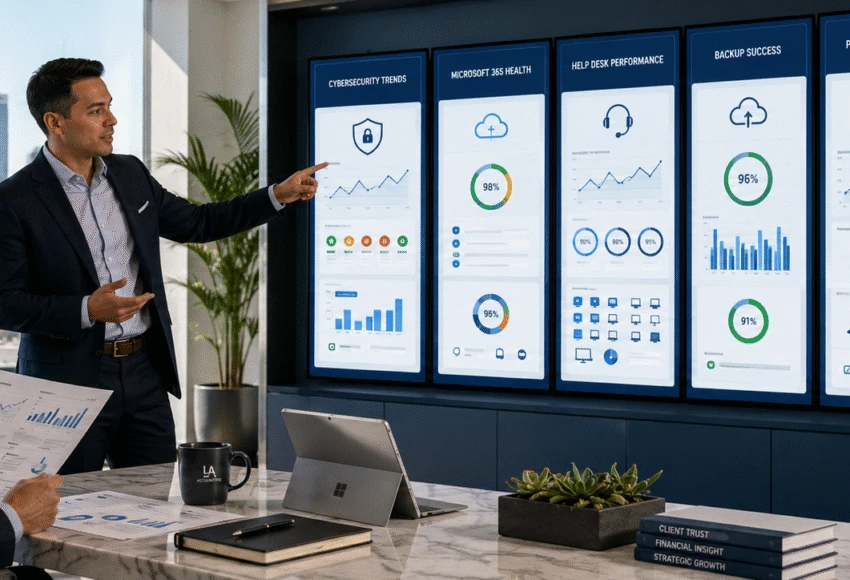
Many accounting firms receive a monthly invoice from their Managed IT Services Provider but little meaningful information about the health of their technology environment. Executive reporting should do far more than summarize help desk activity. A well-designed monthly IT report helps leadership understand cybersecurity risks, technology performance, Microsoft 365 health, […]

Security Assessments and IT Audits for Accounting Firms
For most accounting firms, a comprehensive security risk assessment should be performed at least once a year, with additional reviews whenever significant business, technology, or cybersecurity changes occur. Examples include: Office relocations or expansions Mergers or acquisitions Cloud migrations Microsoft 365 security changes Adoption of AI tools such as Microsoft […]
Microsoft 365 Security for Accounting Firms
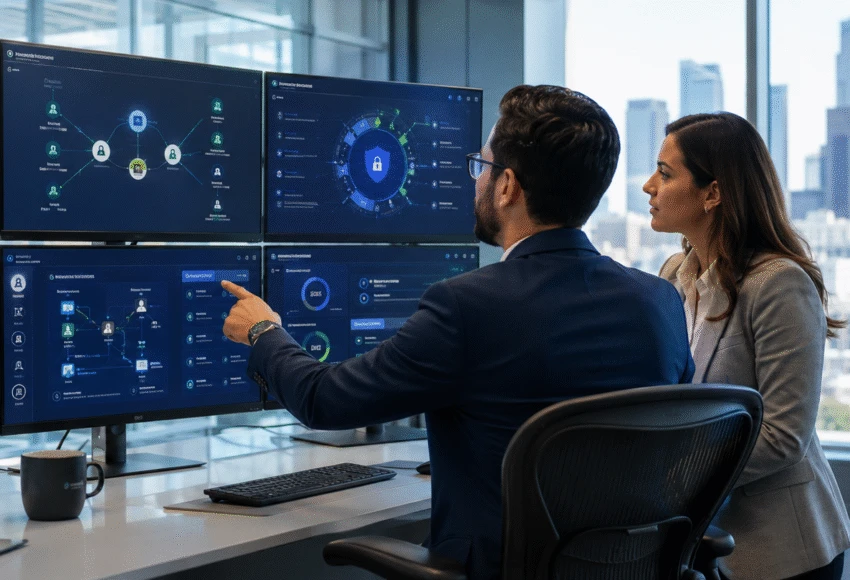
Microsoft 365 has become the operational hub for many accounting firms. It supports email, document storage, collaboration, video meetings, secure file sharing, and increasingly, AI-powered productivity tools such as Microsoft Copilot. Because it contains confidential tax returns, payroll records, financial statements, client communications, and personally identifiable information (PII), Microsoft 365 […]

Business Continuity Planning Beyond Backups
Many accounting firms believe that having daily backups means they are prepared for a cyberattack, server failure, or office outage. Unfortunately, backups alone do not ensure your firm can continue serving clients when unexpected disruptions occur. A comprehensive Business Continuity Plan (BCP) goes beyond protecting data. It defines how your […]

Building a 3–5 Year Accounting Technology Roadmap
Many accounting firms throughout Los Angeles County make technology decisions reactively—replacing hardware only after it fails, purchasing cybersecurity tools after an incident, or upgrading software when compatibility problems arise. While this approach may solve immediate issues, it often results in higher costs, unnecessary downtime, and missed opportunities to improve productivity. […]