
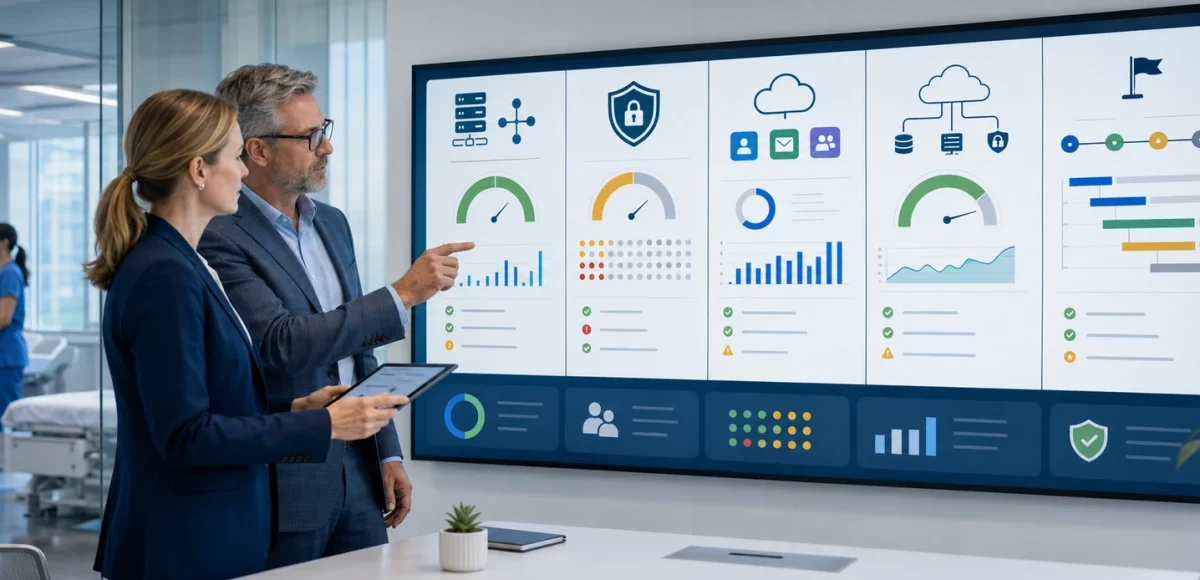
What Is a Healthcare IT Assessment and Why Does Your Medical Practice Need One?
A Healthcare IT Assessment is a comprehensive evaluation of a medical organization’s technology environment, cybersecurity posture, infrastructure, Microsoft 365 configuration, backup strategy, operational risks, and long-term technology planning. Rather than focusing on a single technical issue, an assessment provides leadership with a clear understanding of current strengths, identifies areas for improvement, prioritizes technology investments, and helps build a roadmap that supports patient care, business continuity, and organizational growth.
Who This Guide Is For
This guide is designed for:
- Physicians
- Medical Practice Owners
- Dental Practice Owners
- Practice Administrators
- Healthcare CEOs
- Executive Directors
- Operations Managers
- Compliance Officers
- Financial Decision Makers
Whether you’re evaluating your current IT provider, preparing for organizational growth, strengthening cybersecurity, or simply seeking a better understanding of your technology environment, this guide explains why a Healthcare IT Assessment is one of the most valuable planning exercises your organization can undertake.
What Is a Healthcare IT Assessment?
Technology touches nearly every aspect of modern healthcare.
Patient scheduling.
Electronic Health Records (EHRs).
Medical imaging.
Billing.
Communication.
Cybersecurity.
Cloud applications.
Business Continuity.
Because technology has become so interconnected with patient care and daily operations, healthcare organizations benefit from periodically evaluating how well their technology environment supports their mission.
A Healthcare IT Assessment provides that opportunity.
Rather than fixing individual problems as they arise, an assessment evaluates the overall health of your technology environment and identifies opportunities to improve security, reliability, efficiency, and long-term planning.
Think of it as a comprehensive health checkup, not for patients but for the technology systems your organization depends on every day.
Why This Matters to Your Practice
Many technology issues develop gradually over time. Regular assessments help identify weaknesses before they result in operational disruptions, cybersecurity incidents, or unexpected technology expenses.
Why Healthcare Organizations Need Regular IT Assessments
Technology environments are constantly changing.
New employees join the organization.
Software updates are released.
Cybersecurity threats evolve.
Cloud services expand.
Medical devices are added.
Business priorities shift.
An assessment provides leadership with an opportunity to step back and evaluate whether the organization’s technology continues to support its operational goals.
Without regular assessments, organizations often discover technology gaps only after something goes wrong.
Examples include:
- Hardware failures
- Ransomware attacks
- Backup problems
- Microsoft 365 misconfigurations
- Aging infrastructure
- Weak identity security
- Vendor coordination issues
- Capacity limitations
Regular assessments help organizations move from reactive technology management to proactive planning.
An Assessment Is More Than a Security Scan
Some organizations assume an IT assessment simply means running automated software that identifies technical vulnerabilities.
While technical analysis is important, a comprehensive Healthcare IT Assessment should go much further.
It should evaluate how technology supports the business as a whole.
That includes reviewing:
- Infrastructure
- Cybersecurity
- Microsoft 365
- Cloud services
- Business Continuity
- Backup strategy
- Vendor relationships
- Technology lifecycle planning
- Operational workflows
- Strategic priorities
Technology should always be evaluated within the context of patient care and organizational objectives, not in isolation.
Expert Tip
The most valuable IT assessments combine technical findings with executive‑level recommendations. Leadership should leave the assessment with a clear understanding of priorities, business risks, and practical next steps, not simply a list of technical issues.
Benefits of a Healthcare IT Assessment
A comprehensive assessment creates value across multiple areas of the organization.
Better Visibility
Many healthcare leaders don’t have a complete picture of their technology environment.
An assessment provides greater visibility into:
- Current infrastructure
- Cybersecurity maturity
- Technology strengths
- Existing risks
- Operational dependencies
- Future planning needs
Leadership gains a clearer understanding of how technology supports daily operations.
Improved Cybersecurity
Cybersecurity assessments often identify opportunities to strengthen protections before attackers exploit weaknesses.
Common improvement areas include:
- Multi-Factor Authentication (MFA)
- Endpoint Detection and Response (EDR)
- Microsoft 365 security
- Identity and access management
- Backup verification
- Security awareness training
- Vulnerability management
Rather than reacting after an incident, organizations can prioritize improvements proactively.
Better Budget Planning
Assessments frequently uncover technology investments that will be needed over the next several years.
Examples include:
- Hardware replacement
- Infrastructure modernization
- Cloud migration
- Microsoft 365 optimization
- Cybersecurity improvements
- Business Continuity initiatives
This information helps leadership develop more predictable technology budgets.
Why This Matters to Your Practice
A well‑executed IT assessment doesn’t just identify today’s issues, it helps leadership understand tomorrow’s priorities. That insight supports better budgeting, more informed decision‑making, and fewer unexpected technology expenses.
Assessments Support Long-Term Technology Strategy
Technology assessments shouldn’t end with a written report.
Their greatest value comes from helping organizations answer strategic questions such as:
- Which risks require immediate attention?
- Which projects should be prioritized next?
- Which systems are nearing end of life?
- Are current cybersecurity controls appropriate?
- Does our technology support future growth?
- Are we investing in the right initiatives?
- What should our technology roadmap look like over the next several years?
The assessment becomes the foundation for informed technology planning rather than simply documenting technical findings.
Common Situations That Trigger an IT Assessment
While every healthcare organization benefits from periodic assessments, certain events often make them especially valuable.
Examples include:
- Changing IT providers
- Opening a new location
- Merging with another practice
- Deploying a new Electronic Health Record (EHR)
- Recovering from a cybersecurity incident
- Preparing for cyber insurance requirements
- Planning infrastructure upgrades
- Expanding cloud services
- Developing a technology roadmap
- Preparing annual technology budgets
These milestones provide natural opportunities to evaluate whether technology continues to support organizational objectives.
What Should a Comprehensive Healthcare IT Assessment Include?
Every Healthcare IT Assessment should be tailored to the organization’s size, operational complexity, and strategic objectives.
However, the most valuable assessments evaluate much more than hardware and software.
They provide leadership with a comprehensive understanding of how technology supports the organization’s mission, where risks exist, and what improvements should be prioritized.
The following components are typically included in a comprehensive Healthcare IT Assessment.
1. Infrastructure Assessment
Technology infrastructure forms the foundation of every healthcare organization.
An assessment should evaluate whether critical systems are reliable, appropriately maintained, and capable of supporting future growth.
Typical review areas include:
- Servers
- Workstations
- Laptops
- Firewalls
- Network switches
- Wireless infrastructure
- Internet connectivity
- Storage systems
- Virtualization platforms
The assessment should identify:
- Aging equipment
- Capacity limitations
- Performance concerns
- Warranty status
- End-of-life hardware
- Infrastructure risks
Rather than waiting for equipment failures, leadership gains visibility into future replacement needs.
Why This Matters to Your Practice
Replacing aging infrastructure before failures occur helps reduce downtime, avoid emergency purchases, and improve budget predictability.
2. Cybersecurity Assessment
Cybersecurity should be a central component of every Healthcare IT Assessment.
Rather than evaluating a single security product, the assessment should examine how multiple layers of protection work together.
Areas commonly reviewed include:
- Multi-Factor Authentication (MFA)
- Endpoint Detection and Response (EDR)
- Identity and access management
- Microsoft 365 security
- Email protection
- Security awareness training
- Vulnerability management
- Backup security
- Incident Response preparedness
The objective is to understand the organization’s overall cybersecurity maturity, not simply identify isolated technical issues.
3. Microsoft 365 Assessment
Microsoft 365 has become one of the most important business platforms in healthcare.
A comprehensive assessment should review both productivity and security.
Common evaluation areas include:
- User account management
- Licensing
- Conditional Access
- Microsoft Teams governance
- SharePoint configuration
- OneDrive management
- Email security
- Identity protection
- Administrative permissions
Many organizations discover opportunities to improve both collaboration and cybersecurity without adding new technology.
4. Backup & Business Continuity Assessment
Backups are essential.
Recovery is critical.
A Healthcare IT Assessment should determine whether the organization is prepared to continue operations after a disruption.
Review areas typically include:
- Backup success
- Recovery testing
- Recovery documentation
- Disaster Recovery planning
- Business Continuity procedures
- Recovery priorities
- Critical application dependencies
The assessment should answer an important leadership question:
“If our systems became unavailable today, how prepared would we be to recover?”
Expert Tip
Ask your technology partner to demonstrate that backups can be successfully restored, not simply confirm that backups are running. Recovery confidence comes from testing, not assumptions.
5. Cloud Services Assessment
Most healthcare organizations now operate in hybrid technology environments.
An assessment should evaluate cloud services such as:
- Microsoft 365
- Cloud-based EHR platforms
- Practice Management applications
- Cloud storage
- Software-as-a-Service (SaaS) solutions
- Telehealth platforms
Leadership should understand:
- Which systems are cloud-based
- Shared security responsibilities
- Integration requirements
- Business risks
- Opportunities for optimization
Cloud adoption should support operational goals while maintaining appropriate security and governance.
6. Vendor Management Assessment
Healthcare organizations often depend on numerous third-party technology vendors.
Examples include:
- Electronic Health Record (EHR) vendors
- Imaging companies
- Laboratory integrations
- Telephone providers
- Internet Service Providers
- Medical device manufacturers
- Cloud software vendors
- Payment processing systems
A comprehensive assessment evaluates whether vendor relationships are well coordinated and whether responsibilities are clearly understood.
Strong vendor management often improves operational efficiency while reducing delays during technology issues.
7. Technology Lifecycle Assessment
Technology planning requires understanding where major assets are within their lifecycle.
An assessment should identify:
- Equipment approaching end of life
- Warranty expiration dates
- Hardware replacement priorities
- Software lifecycle concerns
- Infrastructure modernization opportunities
This information becomes the foundation for future budgeting and technology roadmaps.
Why This Matters to Your Practice
Lifecycle planning helps organizations replace technology strategically rather than reacting to failures that interrupt patient care or business operations.
8. Strategic Technology Assessment
Perhaps the most valuable part of the assessment is evaluating whether technology aligns with organizational objectives.
Leadership discussions often include questions such as:
- Does our technology support future growth?
- Are cybersecurity investments appropriately prioritized?
- Which technology projects should come next?
- Is our Microsoft 365 environment fully optimized?
- Are Business Continuity capabilities sufficient?
- How should Artificial Intelligence (AI) fit into future planning?
- Are we investing strategically, or reacting to problems?
These conversations elevate the assessment from a technical review to an executive planning exercise.
Common Technology Gaps Assessments Frequently Reveal
Even well-managed healthcare organizations often discover opportunities for improvement.
Some of the most common findings include:
Aging Infrastructure
Critical hardware may be approaching end of life without leadership realizing it.
Examples include:
- Servers
- Firewalls
- Wireless access points
- Network switches
- Storage systems
Replacing aging equipment proactively reduces operational risk.
Identity Security Weaknesses
Many organizations discover opportunities to strengthen identity security through:
- Multi-Factor Authentication
- Conditional Access
- Administrative account protection
- User lifecycle management
- Password policy improvements
Identity security has become one of the most important cybersecurity priorities.
Microsoft 365 Misconfigurations
Organizations frequently underutilize Microsoft 365 security capabilities.
Assessments often identify opportunities involving:
- Conditional Access
- Email protection
- SharePoint permissions
- OneDrive governance
- Administrative controls
- Identity protection
Optimizing existing capabilities often improves both security and productivity.
Backup & Recovery Risks
Common assessment findings include:
- Recovery testing hasn’t been performed recently.
- Backup documentation is outdated.
- Recovery objectives are unclear.
- Leadership expectations differ from technical capabilities.
Understanding these gaps before an emergency occurs significantly improves organizational resilience.
Limited Strategic Planning
Some organizations receive excellent day-to-day technical support but little executive guidance.
Assessments may reveal the need for:
- Technology roadmaps
- Hardware lifecycle planning
- Budget forecasting
- Cloud strategy
- AI readiness
- Executive technology reviews
Technology becomes significantly more valuable when strategic planning accompanies technical support.
Expert Tip
The purpose of an assessment isn’t to achieve a “perfect” technology environment. It’s to identify the highest-priority improvements so leadership can make informed decisions based on business impact, available resources, and organizational goals.
Healthcare IT Assessment Checklist
A Healthcare IT Assessment should provide leadership with a clear understanding of how well technology supports patient care, cybersecurity, operational efficiency, and future growth.
Use this checklist to evaluate whether your organization has recently reviewed the areas that matter most.
Infrastructure Assessment
- We maintain an accurate inventory of technology assets.
- Servers are operating within expected performance levels.
- Network equipment is regularly evaluated.
- Wireless coverage supports clinical and administrative workflows.
- Hardware approaching end of life has been identified.
- Warranty information is documented.
- Capacity planning has been completed for future growth.
A healthy infrastructure reduces operational disruptions while improving long-term budgeting.
Cybersecurity Assessment
- Multi-Factor Authentication (MFA) has been implemented where appropriate.
- Endpoint Detection and Response (EDR) protects supported devices.
- Microsoft 365 security has been reviewed.
- Administrative accounts are appropriately protected.
- Security awareness training is conducted regularly.
- Vulnerability management is part of ongoing operations.
- Security Risk Assessments are performed periodically.
- Incident Response procedures have been reviewed.
Cybersecurity assessments should evaluate how multiple security controls work together, not simply whether individual products are installed.
Why This Matters to Your Practice
A cybersecurity assessment should help leadership understand organizational risk in business terms, not just technical findings. Prioritizing improvements based on operational impact leads to better long‑term decisions.
Microsoft 365 Assessment
- User accounts are reviewed regularly.
- Conditional Access policies have been evaluated.
- SharePoint permissions are appropriate.
- Microsoft Teams governance has been established.
- OneDrive policies have been reviewed.
- Administrative roles follow least-privilege principles.
- Licensing is optimized for organizational needs.
Microsoft 365 often represents one of the organization’s most valuable business platforms and should be assessed accordingly.
Backup & Business Continuity Assessment
- Backup jobs are monitored automatically.
- Recovery testing has been completed recently.
- Recovery documentation is current.
- Disaster Recovery procedures are documented.
- Critical systems have been prioritized.
- Leadership understands expected recovery timelines.
- Business Continuity planning has been reviewed.
Successful recovery depends on preparation, not assumptions.
Cloud Services Assessment
- Cloud applications have been documented.
- Shared security responsibilities are understood.
- Cloud integrations are functioning properly.
- Cloud security settings have been reviewed.
- Data protection policies include cloud services.
- Cloud costs are evaluated periodically.
Cloud technologies should improve flexibility without increasing unmanaged risk.
Vendor Management Assessment
- Technology vendors have clearly defined responsibilities.
- Electronic Health Record (EHR) vendors coordinate effectively with our IT provider.
- Medical device vendors participate in technology planning when appropriate.
- Internet and telecommunications providers are documented.
- Third-party software vendors are managed efficiently.
- Escalation procedures are understood.
Strong vendor coordination improves communication and reduces delays during technical issues.
Technology Lifecycle Assessment
- Hardware replacement schedules are documented.
- Warranty expiration dates are tracked.
- Software lifecycle planning is current.
- Infrastructure modernization priorities have been established.
- Technology budgeting reflects future replacement needs.
- Leadership understands upcoming capital investments.
Lifecycle planning helps organizations replace technology before failures create operational disruption.
Strategic Technology Assessment
- Technology supports our organization’s strategic objectives.
- Leadership reviews technology priorities regularly.
- Future technology initiatives have been prioritized.
- Cybersecurity investments align with organizational risk.
- Cloud strategy has been evaluated.
- Artificial Intelligence (AI) readiness has been discussed.
- Technology planning extends beyond the current budget year.
A Healthcare IT Assessment should conclude with practical recommendations, not simply technical observations.
Expert Tip
The most effective assessments prioritize recommendations based on business impact, risk reduction, implementation effort, and organizational goals. Not every improvement needs to happen immediately, but every recommendation should support a broader technology strategy.
Healthcare IT Assessment Maturity Model
After completing this checklist, consider which stage best represents your organization’s current approach to technology evaluation.
Level 1: Reactive Assessment
Technology is evaluated primarily after problems occur.
Characteristics often include:
- Emergency troubleshooting
- Limited documentation
- Aging infrastructure
- Infrequent cybersecurity reviews
- Minimal executive visibility
- Few long-term planning discussions
Organizations at this stage often respond to technology rather than proactively managing it.
Level 2: Proactive Assessment
Technology assessments occur on a regular basis.
Common characteristics include:
- Documented infrastructure reviews
- Cybersecurity evaluations
- Backup testing
- Microsoft 365 assessments
- Hardware lifecycle planning
- Annual technology planning
Organizations gain greater operational stability and improved decision-making.
Level 3: Strategic Technology Governance
Technology assessments are integrated into executive planning.
Typical characteristics include:
- Multi-year technology roadmap
- Executive technology reviews
- Cybersecurity governance
- Business Continuity planning
- AI readiness discussions
- Budget forecasting
- Continuous improvement initiatives
- Cross-functional leadership participation
Organizations at this level use assessments to guide long-term investment decisions and continuously strengthen operational resilience.
Why This Matters to Your Practice
A mature assessment process doesn’t simply identify problems. It helps leadership prioritize investments, manage organizational risk, and ensure technology consistently supports patient care and business objectives.
Measuring the Value of an IT Assessment
A successful Healthcare IT Assessment should produce measurable organizational improvements over time.
Healthcare leaders may observe:
- Reduced technology downtime
- Improved cybersecurity maturity
- Better Microsoft 365 security
- Stronger backup and recovery readiness
- More predictable technology budgeting
- Improved vendor coordination
- Better infrastructure reliability
- Increased employee productivity
- Greater executive confidence
- Stronger alignment between technology and business strategy
The greatest value comes from acting on assessment findings, not simply completing the assessment itself.
Questions Every Leadership Team Should Ask
Following an assessment, executive leadership should discuss questions such as:
- Which recommendations should be addressed first?
- Which risks have the greatest potential business impact?
- Which technology investments should be included in next year’s budget?
- Are we adequately prepared for ransomware or operational disruption?
- Does our infrastructure support future organizational growth?
- How should Artificial Intelligence (AI) fit into our technology strategy?
- What should our technology roadmap look like over the next one to three years?
These discussions help transform assessment findings into actionable business decisions.
From Assessment to Action
An assessment should never become a report that sits unread after it’s delivered.
Instead, it should serve as the starting point for:
- Technology roadmap development
- Infrastructure modernization
- Cybersecurity improvements
- Business Continuity planning
- Microsoft 365 optimization
- Budget forecasting
- Leadership planning sessions
The organizations that receive the greatest value are those that consistently turn assessment insights into measurable improvements.
Executive Summary for Healthcare Leaders
If you remember only five ideas from this guide, make them these:
1. A Healthcare IT Assessment Provides a Complete Technology Baseline
Before leadership can confidently plan future technology investments, they need a clear understanding of the organization’s current environment.
An assessment establishes that baseline.
2. Assessments Should Go Beyond Technical Reviews
The most valuable assessments evaluate infrastructure, cybersecurity, Microsoft 365, cloud services, business continuity, vendor relationships, and strategic planning, not just hardware or software.
3. Technology Assessments Improve Business Decisions
Assessment findings help leadership prioritize investments, improve budgeting, reduce operational risk, and align technology with organizational objectives.
Technology becomes a business asset rather than simply an operational necessity.
4. Cybersecurity Should Be Integrated Throughout the Assessment
Cybersecurity is no longer a standalone initiative.
Identity protection, Microsoft 365 security, backup strategy, Business Continuity, employee awareness, and governance should all be evaluated together.
5. An Assessment Is the Foundation for a Technology Roadmap
Organizations gain the greatest value when assessment results lead directly to strategic planning, measurable improvements, and continuous technology optimization.
How Fothion Helps Healthcare Organizations Evaluate Their Technology
At Fothion, we believe a Healthcare IT Assessment should do more than identify technical issues; it should help leadership make better business decisions.
Our healthcare-focused assessment process provides organizations with a comprehensive evaluation of their technology environment, clear executive-level recommendations, and practical guidance for improving security, operational resilience, and long-term planning.
Our Healthcare IT Assessments commonly include:
- Infrastructure evaluations
- Cybersecurity posture reviews
- Microsoft 365 assessments
- Cloud environment analysis
- Backup and Business Continuity evaluations
- Technology lifecycle planning
- Vendor coordination reviews
- Strategic technology planning
- AI readiness discussions
- Executive technology recommendations
Rather than delivering an overwhelming list of technical findings, we help healthcare leaders prioritize improvements based on business impact, organizational goals, and available resources.
Schedule a Healthcare IT Strategy Assessment
Whether you’re evaluating your current technology environment, preparing for future growth, strengthening cybersecurity, or developing a long-term technology roadmap, a comprehensive Healthcare IT Assessment can provide the clarity needed to make informed decisions.
A Healthcare IT Assessment can help your organization:
- Understand your current technology environment
- Identify operational and cybersecurity risks
- Evaluate Microsoft 365 security
- Assess infrastructure lifecycle needs
- Review Business Continuity readiness
- Prioritize technology investments
- Improve budgeting accuracy
- Build a strategic technology roadmap
A clear understanding of today’s environment creates a stronger foundation for tomorrow’s decisions.
Book your 30-minute call with Fothion now:

Continue Learning About Healthcare IT & Cybersecurity
Continue learning with these related Healthcare IT resources:
- Why Healthcare Organizations Need a Technology Roadmap (And How to Build One)
- How Much Does Managed IT Cost for a Medical Practice?
- What Does Managed IT Services Include for a Medical Practice?
- How to Choose the Right IT Provider for Your Medical or Dental Practice
- Healthcare Cybersecurity Checklist: Essential Security Controls Every Medical Practice Should Have
- Microsoft 365 Security Best Practices for Healthcare Organizations
- Can Healthcare Professionals Use AI Tools Like ChatGPT Without Violating HIPAA?
Together, these Healthcare Industry Insights help healthcare leaders evaluate their current technology environment, prioritize future investments, strengthen cybersecurity, and make informed strategic decisions.
About This Guide
This article is part of Fothion’s Industry Insights, a growing library of educational resources created for healthcare executives, physicians, administrators, and practice leaders.
Our goal is to provide practical, vendor-neutral guidance that helps organizations understand technology, reduce risk, improve operational resilience, and make confident long-term technology decisions.
Every guide is designed to support informed leadership by translating complex IT concepts into actionable business strategies.
Educational Disclaimer
This article is provided for educational and informational purposes only and should not be interpreted as legal, regulatory, compliance, financial, or technology consulting advice. Every healthcare organization has unique technology environments, operational priorities, cybersecurity risks, and business objectives that should be evaluated individually.
Organizations should work with qualified technology professionals to assess their infrastructure, cybersecurity posture, cloud environments, and long-term technology strategies. Recommendations should always be tailored to the organization’s specific operational, regulatory, and business requirements.
Final Thoughts
Technology decisions have far-reaching implications for every healthcare organization.
From cybersecurity and infrastructure reliability to cloud services, Microsoft 365, and Business Continuity, each component plays a role in supporting patient care and operational success.
A Healthcare IT Assessment provides leadership with the visibility needed to understand where the organization stands today, where risks exist, and what priorities deserve attention next.
More importantly, it creates a foundation for informed decision-making.
When assessment findings are paired with a strategic technology roadmap, organizations can move beyond reactive IT management and build a more secure, resilient, and future-ready technology environment.
In an increasingly digital healthcare landscape, organizations that regularly evaluate their technology are better positioned to adapt to change, invest wisely, and support exceptional patient care for years to come.
Frequently Asked Questions About Healthcare IT Assessments
Healthcare leaders often know they should evaluate their technology environment but aren’t always sure what an assessment includes, how often it should be performed, or what to expect from the process.
Below are answers to some of the most common questions.
How Often Should a Healthcare IT Assessment Be Performed?
Most healthcare organizations benefit from a comprehensive IT Assessment at least once every 12 to 24 months.
However, additional assessments may be appropriate after significant organizational changes such as:
- Opening a new location
- Mergers or acquisitions
- Implementing a new Electronic Health Record (EHR)
- Recovering from a cybersecurity incident
- Major Microsoft 365 migrations
- Significant infrastructure upgrades
- Leadership changes
- Rapid organizational growth
Regular assessments help ensure technology continues supporting operational and strategic goals.
What Is the Difference Between an IT Assessment and a Security Risk Assessment?
While the two are related, they serve different purposes.
A Security Risk Assessment focuses primarily on identifying cybersecurity risks and evaluating security controls.
A Healthcare IT Assessment is broader.
It typically evaluates:
- Technology infrastructure
- Cybersecurity
- Microsoft 365
- Cloud services
- Backup and recovery
- Business Continuity
- Vendor management
- Hardware lifecycle planning
- Strategic technology alignment
- Future technology investments
Think of cybersecurity as one critical component of a comprehensive technology assessment.
Will an IT Assessment Disrupt Daily Operations?
In most cases, no.
Many assessment activities can be completed with minimal disruption to clinical or administrative workflows.
The process often includes:
- Documentation review
- Leadership interviews
- Technology analysis
- Infrastructure review
- Security evaluation
- Strategic planning discussions
When technical testing is required, it can usually be scheduled to minimize operational impact.
Can Small Medical Practices Benefit From an IT Assessment?
Absolutely.
Smaller organizations often have fewer internal technology resources, making periodic assessments even more valuable.
Assessments help smaller practices:
- Prioritize technology investments
- Improve cybersecurity
- Plan infrastructure replacements
- Strengthen Business Continuity
- Reduce unexpected technology expenses
- Support future growth
Strategic planning benefits organizations of every size.
Does an Assessment Evaluate Microsoft 365?
Yes.
Because Microsoft 365 often serves as the foundation for communication, collaboration, identity management, and cloud productivity, it should be evaluated as part of a comprehensive assessment.
Typical review areas include:
- Identity security
- Multi-Factor Authentication (MFA)
- Conditional Access
- Licensing
- Email security
- SharePoint
- OneDrive
- Microsoft Teams governance
- Administrative permissions
Many organizations discover opportunities to improve security and productivity using capabilities they already own.
Will an Assessment Help With Technology Budgeting?
Yes.
One of the greatest benefits of an assessment is improving long-term financial planning.
By identifying aging infrastructure, cybersecurity priorities, licensing needs, and future technology initiatives, leadership can develop more predictable budgets and avoid unexpected capital expenses.
An assessment often becomes the starting point for a multi-year technology roadmap.
What Happens After the Assessment Is Complete?
The assessment itself is only the beginning.
Organizations should use the findings to:
- Prioritize technology initiatives
- Develop a technology roadmap
- Strengthen cybersecurity
- Improve Microsoft 365 governance
- Plan infrastructure upgrades
- Enhance Business Continuity
- Align technology investments with business goals
The greatest value comes from implementing recommendations over time, not simply receiving a report.
Leave a Comment